WRITING ABOUT WRITING
Thoughts on screenwriting, AI, craft, and the stories we tell ourselves.

Why I Write
As a kid, I always had my nose in a book. The Cuyahoga County Public Library was my idea of paradise, and I spent whole Sunday afternoons there, drunk on words.
Read Full Post
A SCREENPLAY IS LIKE AN EGG
Not in taste. (You're hopefully not chewing your pages.) I mean in shape. Picture it: a screenplay begins at a single point in space and time. It immediately widens, expands in all directions, developing, ramifying. Like the curve of an egg. Characters appear, plotlines sprout, themes and images and metaphors grow and establish. Everything reaches outward, complicating, multiplying. Then comes the midpoint — the equator of the egg. By then, every major element has shown up at the party. Characters are locked in, arcs underway. The world is built, the setups are planted, the questions are burning. There are still surprises to come but from here, the story doesn't sprawl outward anymore. It bends inward. Slowly, inexorably, things yearn toward resolution, completion, connection, union. Gravity pulls everything home. Strands intertwine, reversals trigger payoffs, characters reveal themselves to each other, arcs curve to their conclusion, the character and the world now both the same and fundamentally different, the opposite side of the egg. Before the last unifying climax, tension condenses, everything is on the line all at once. Until finally, in the last moments, all the chickens come home to roost (forgive the barnyard consistency), the central story question that kept us on the edge of our seats is answered, and even the oddball threads you weren't sure would belong find their way into the nest. (Working this egg metaphor for all I've got.) That feeling — of a story growing, enriching, magnifying, and then tightening, drawing inward, fusing into an emotionally satisfying whole, where everything you've created in the story finds its rightful home — is what you should cultivate. Not just as an abstract idea, but as a sensation in your body. Kinesthetic. Physical. If a screenplay feels to you like nothing more than a mechanical chain of "this happens, then that happens," you'll never know the satisfaction of a story well told. And neither will your audience. So consider the egg, my friend. Not fragile, but whole. Elegant, nothing wasted, nothing without purpose, nothing left out. A shape that contains everything it needs and knows how to finish what it starts.

EXPOSING EXPOSITION
Exposition: the bane of every screenwriter's existence. We all face the same slog. In a screenplay, the audience needs to know certain things to make sense of what's happening. But in real life, people don't sit each other down and carefully explain the backstory of their lives, their jobs, their world. They just live it. Most of the time they try hard to avoid talking about important truths. It's even worse when we know that both characters already know what's being said. So clunky when one character says to another "Hello, sister," or any dialogue starting with "As you know …" And when sci-fi technology is involved, it feels supremely dumb when a character starts explaining things everyone in that world would already be aware of, as if we walk around telling each other how light switches work. But there it is, you've got to shoehorn that expo in because the audience needs to know. So you force your characters to spell it out, and they sound inauthentic, boring, clunky — and worst of all, they start behaving in ways that have nothing to do with their real drives in the story. And nothing kills a scene faster than characters breaking out of themselves just to serve the audience an information sandwich. No writer is immune from the challenge, you see bad exposition even in top-run series now and then. Over the years I've collected a few tricks to make exposition not just tolerable, but electric. Here are three of my favorites: 1. Make it a weapon. Let your characters hurl the exposition at each other in an argument. Use it to hurt each other. Don't just give us facts — make those facts land like punches. If one character accuses the other of what they did in 1997, or how they failed their kid, or who they betrayed, it's not "exposition," it's ammunition. That's conflict. 2. Let them be wrong. Who says exposition has to be accurate? People are mistaken about each other all the time. Or they lie. Or they cling to convenient myths. After taking it as fact, and seeing the character through that lens for a good chunk of the story, we only learn the truth later, and realize the character was unjustly maligned. Or unfairly lionized. And we have been watching a different movie than the one we thought we were watching. That makes it dramatic irony and reversal just as much as exposition. And it keeps us leaning forward. 3. Delay, delay, delay. This might be my favorite. Don't hand over the explanation when the audience first expects it. A character asks a question? The other doesn't answer. Even when pushed, even when it's important. That's conflict, tension, mystery. Someone does something that makes no sense or seems out of character? Don't be so quick to explain it. Let it stay confusing for a while. More mystery, and surprise. Then, pages later, let the information fall out almost by accident – preferably by behavior, not words – while something else is going on, no focus placed on the explanation. Then you can give your audience the gift of their own private "Ahhh" moment, when they figure it out for themselves. That's not exposition, that's suspense, and its release. Example – the guy took a phone call from his wife while in bed with another woman — sleazeball, right? No explanation given. Fifteen pages later, we learn they've been divorced for ten years, and he's not over her. What looked like sleaze now reads as something else entirely – something sad. Our scorn becomes compassion. That's not exposition, that's character revelation. Every moment of your screenplay can, and should, shine, surprise, entrance, and delight. Even the ones that have to carry the baggage of exposition. Especially those.

TO AI OR NOT TO AI
Unless you've been living in a monastery without wi-fi you've heard that the AI Singularity - or Apocalypse or Utopia or how you'd like to think of it -- is just around the corner and screenwriters, like all other professionals, are doomed to extinction, joining the ranks of town criers, lamplighters and buggy-whip makers. You've no doubt already developed your own take about it: you've either decided to ignore AI entirely, with the hauteur of a 19th-century novelist sniffing at the "moving pictures," or figured this was your shortcut to the A-list and tried to get AI to serve you up a screenplay like ordering a pizza (how's that working out for you?), or just felt a mite bewildered on how to deal with it and what to do about it in these changing times. Here's where I stand: while AI may one day turn into Skynet and wipe us all out except for a handful of doughty survivors gnawing on canned beans, right now you can make AI a powerful asset instead of a looming liability. AI can be the best writing partner you ever had. Tireless, weirdly cheerful, unendingly creative if not always on point, and lets you win all the arguments. It's all a matter of asking it to do the right things, of asking the right questions -- but screenwriting has ALWAYS been a matter of asking yourself the right questions. When you see good screenwriting, you see a writer with a really productive, penetrating and provocative set of questions to ask themselves in their writing process. (A subject of more than one blog entry to come.) What AI is really good at right now is brainstorming idea after idea on narrowly constructed questions you ask it. What mix of personal qualities could my leading characters have that would serve the story and provide interesting moments? What would be a good plot twist or unexpected development or reveal or reversal of expectation here that would build on xyz from the previous scenes? What mix of characters could inhabit this story world to give me varied and interesting series subplots and different takes on the central theme, and how might they interact with each other? The possibilities are endless -- basically, whatever you're stuck on or whenever you think there's more to be found. The thing that used to weigh most heavily on me in writing a spec was the sinking feeling that there was a more inventive way to realize the promise of the premise, but I just hadn't thought of it yet. One A-lister I spoke to about his process said that he routinely thinks up 40 versions – 40! -- of every scene before he writes it. And that was before AI. Now, with AI, you can do the same as he does effortlessly. You can expect most of what AI comes up with to be wrong in any of a number of ways for your story, but that five or ten or sometimes twenty percent that really does light you up – that's priceless. It gives you the gift that before now only a co-writer or great feedback could give you: it gets you out of your head and into new territory that you might never have stumbled on by yourself. Yes, AI as it quickly evolves may change the face of screenwriting, but if you want a fighting chance of staying relevant and desirable in the marketplace, become its master -- now -- and not its servant.
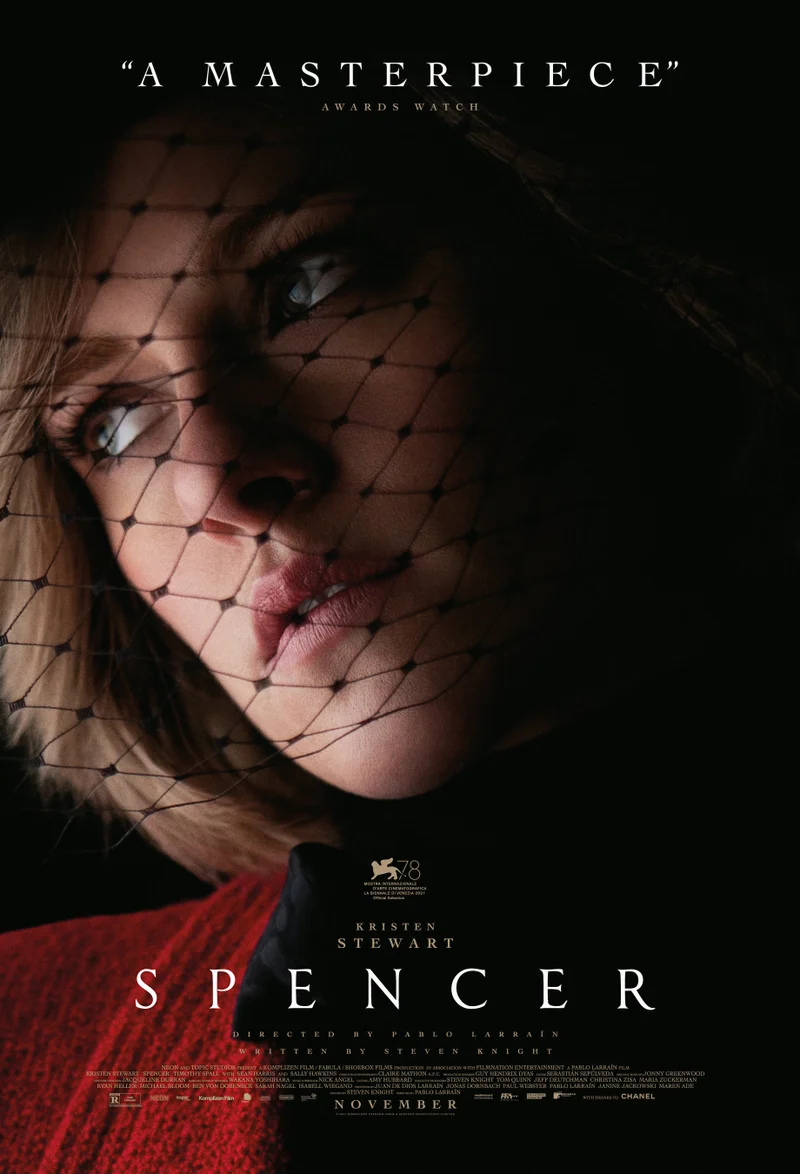
SPENCER, by Steven Knight – Dialogue Without Communication
Sometimes the most brilliant writing isn't in the fireworks — it's in the quiet, precise brushstrokes you almost don't notice until you look closer. That's what this blog section is about, examining the work of A-list writers. My script choices aren't based on chronology, theme, stars, or box office receipts – they're all just memorable bits of writing that have stuck with me long after I viewed the movie. My first offering is SPENCER, a 2021 historical psychological drama film written by Steven Knight. The film is about Princess Diana's existential crisis during the Christmas of 1991 as she considers divorcing Prince Charles and leaving the British royal family. It's a master class in powerful moments delivered with devastatingly effective understatement and subtext. One extended scene in particular blew me away with the sheer craft of it, done in a way that draws no attention to itself or the writer but creates something intense and original. For those following along in the workbook, it's scene 47, pages 61 through 66 in the final shooting script. Leaving aside the brilliance of the acting, what strikes me is the disjointedness of the conversation – or rather, mutual inquisition. We expect two characters in a scene to talk about the same thing with each other, but Steven Knight had a different approach. For most of the scene, the two characters, Diana and Charles, don't respond to what's said to them and instead continually switch to a different point of attack or defense. This will be a long post because this long scene deserves to be broken down in full. Imagine this: thanks to the brilliant direction of Pablo Larraín, they line up at opposite sides of a billiards table, the balls laid out in a geometric and sterile pattern like the frozen sterility of their relationship. Diana launches the first attack: she complains that her son William is being made to shoot clay pigeons when he doesn't want to shoot guns. Charles acts as if she hasn't spoken and announces his intention for the meeting: "Someone said something about clothes." Vague, yet both characters know exactly what he means. In an act of rebellion, she had purposely worn the wrong dress to breakfast. And earlier, complaining to her dresser about the enforced regimen of which clothes are to be worn when, she had changed in front of an open window and been seen by guards on the palace grounds. Diana ignores him in turn and returns to her attack: "Will he be alright?" Charles finally deigns to respond briefly, then resumes his own attack: "Of course he will be alright. Your dresser said something about clothes." Diana continues to ignore his subject and sticks with hers: "I mean will he be safe?" "It's perfectly safe. You wear protective glasses." "How can it be safe if you have to wear protective glasses?" Then the stage direction makes clear what's been going on: they are "not answering each other, an explosion that never detonates." Charles switches to a new line of attack: "And yesterday you arrived after the Queen." Diana actually responds to that, and for three lines they both talk about the same thing before Charles adds a new log to the bonfire: "She says you took a jacket off a scarecrow." He means the dresser said it, not the Queen, but no one is being specific about anything. Diana shrugs it off: "It was a bit of fun." Charles expands on his previous attack: "You're sure you weren't late yesterday because you were delayed by someone?" Again, saying something without saying it – he's accusing her of having a flagrant affair in public. "Someone?" she responds, taunting his unwillingness to be specific. "I thought someone might have delayed you." Only slightly less vague though his real meaning is clear to both of them. "No," she replies. Then, after a "silence throbbing with accusation and unspoken truths," "Sometimes you get delayed. By someone. No one says anything. It's perfectly acceptable when you get delayed by someone." Again, though couched in vagueness, both of them know she means his affair with Camilla Parker Bowles. Then, the actor's or the director's choice, Charles touches the black billiard ball and rolls it out of position, the only outward manifestation of his unease. And now he is the one who shifts subjects defensively, returning to Diana's complaint: "How can you ask if it's safe? It's tradition." Diana ignores his shift and adds a new attack: "Why did you send Maggie away?" (Maggie is the dresser.) And Charles responds to that – again, safer than addressing his own affair. Until he breaks to a fresh version of his original attack: "They are circling us. Didn't you know? Don't you read? They are hungry for anything. Why are you swapping dresses around?" But Diana isn't having it. She again taunts Charles for lacking the courage to actually accuse her of an affair: "Why would you think I got delayed by someone?" "Oh come on," responds Charles. Diana returns to her original complaint: "He said he didn't want to shoot yet." After a few lines swapped on that subject, Charles brings yet another weapon to bear: "Also one of Major Gregory's men saw you wandering around in the grounds last night." She feels obligated to respond to that for a few lines until he dismisses her with "You talk like a baby who isn't being spoilt enough." Diana returns again to her original complaint before delivering a real haymaker: "I would like it if you didn't make him shoot real birds tomorrow. And I would like it if you didn't buy me pearls because you bought us both the same thing." "Us both" is of course her and Camilla, but as throughout the cutting edge is hidden by vagueness. After letting that sink in, she continues by responding to something he said 15 lines earlier: "If they are circling, it seems they are circling just me, not you. Just me. " Charles jumps at the opening she's given him: "Perhaps that's because I always take care to close my curtains. " A brilliant speech follows from Charles that begins "The thing is Diana, there has to be two of you. Two of me, two of Father, two of everyone. There's the real one and the one they take pictures of. " Finally, someone actually says what they mean! Though it's couched in fake care and concern, finishing with "I'm sorry. I thought you knew. " And he rolls the black ball, with backspin, down the billiard table to her. She grabs it and grips it white-knuckled. One last switch from Diana in response: "I want Maggie back. " To which Charles, who clearly has been holding more cards than Diana throughout, adds a brand new attack: "Someone" – note the vagueness of that – "Someone heard Maggie saying she thinks you're cracking up. " Diana looks like she wants to throw the billiard ball at his head, but, truly off-balance now that her dresser, the rock on which she stood, has just been shown to be no more of a refuge than anyone else in the castle, just manages "What?" Leaving Charles with the last word, which again says everything while saying nothing: "Everybody here hears everything. They just don't always tell you what they've heard. " Dizzying, the whole scene. Remarkable. Shift after shift, asymmetric, off-balance the whole time, while taking place in a room of perfect symmetry. But by the end, everything is said and everything responded to, in a fashion. Someday, when I've grown up, I'd like to be able to write like that. Until then, the best we can do is study scenes like this one and remember what's possible when dialogue refuses to behave.
THE GREAT CONVERSATION
I was a Philosophy major in college, because I thought it would be good training for reading boring books in law school. The joke was on me, though, because I never went to law school -- I got bitten by the acting bug instead -- and I found philosophy wasn't so boring after all. It was a fascinating discourse between deep thinkers through the ages, separated by time but not by intent: they were all sincere seekers of the truth. Though most of them never met or even lived at the same time, it was as if they were having one conversation, responding to what had come before, refuting it, adding to it, sending it spinning in new directions, a single Great Conversation. Reading their works, it was moving to know that I was being invited, as we all are, to add to that conversation, to create something worth being read and responded to by those who come after me. Later, though I was never an observant Jew, I discovered the Talmud and saw the same single, sincere, and deeply considered Great Conversation on the subject of Jewish thought, culture, and morality, except in the Talmud they are all compiled together in dozens of volumes, each new entry physically spiraling outward on the page from the older ones. It was like holding a time machine of deep thoughts and feelings through the ages. You probably see where I'm going with this. I like to think that there is in screenwriting and storytelling another Great Conversation. We are each of us influenced by the movies and TV shows we've seen before, some of them deeply imprinted into our psyche, and they affect what we write. Writers in particular want to know, have to know what came before, if only so that they don't unwittingly just copy what's already been done better by a better writer, because no writer wants to be accused of being simply derivative. But there's a far more compelling reason to consider ourselves as part of the Great Conversation of storytelling. For one thing, it's inspiring. Wouldn't you like to be in conversation with the greats? Wouldn't you like to write something worth remembering, worth talking about, worth being inspired by, in the future? And it's a challenge, a way of setting the bar higher: What can I write today that would be an ADDITION to the Great Conversation of storytelling? Something that's never been told quite that way before, something that illuminates a truth about life and humanity more deeply, shines a light where darkness had reigned? Even if only in small ways -- mostly only in small ways, because, let's face it, a lot of great writers have written a lot of great stories over the years and it's unlikely you'll find completely virgin territory to work in. It's personally the first question I ask myself on every script, every page, every line: how can I lift this exchange out of the expected so we can hear it like we've never heard it before, where can I find something fresh to say, how can I reveal an old truth in a new way? It's not about being new for the sake of newness -- anyone can write arbitrary weird junk that makes no story sense. It's about finding a new voice to break through the trance of what the audience has been trained to expect, so they can have the experience they mostly haven't had since they were children: seeing the world through new eyes. If only for that cinematic moment. A lot of the skills in my bag of tricks are about invoking that freshness. But it starts with the motivation. Do you want to be a great writer? Then you have to be part of the Great Conversation. By adding to it. By saying something that the creators of the past, and the creators of the future, will find true. And beautiful. And new.
I CAN'T BELIEVE YOU SAID THAT
This blog article, about avoiding overused dialogue, is kind of a specific, craft-oriented, negative version of my blog article THE GREAT CONVERSATION. You can't be having that Great Conversation if you're using expressions that have been used over and over in movie after movie. There's a terrific article from ScreenCraft magazine that catalogues some of the worst offenders: https://screencraft.org/blog/35-most-overused-lines-of-dialogue-in-screenplays/. Go read it. Bookmark it. Tattoo it on your forearm if you have to. They've compiled gems like "We've got company," "I have a bad feeling about this," "It's quiet... too quiet," and the ever-popular "You just don't get it, do you?" These lines have been wheeled out so many times they've worn grooves into the collective unconscious. Here are some of my own additions to the hall of shame: "Well, that went well." "If you die, I'm gonna kill you." "Well, don't look at me!" "It's a trap!" "What's that supposed to mean?" Or often, the lame "What?" Sometimes hard to avoid, but please try! Now, as the ScreenCraft article points out, sometimes one of these phrases is used on purpose—for humor, irony, or as a self-referential callback to another movie or to the genre as a whole. Cinema for some time now has been in what I think of as its Baroque period—self-referential to the extreme, with an emphasis on minor variations on accepted themes. But that's another blog article. I have a private theory that when the audience is fed movie phrases that are all too familiar, or standard conversational clichés, it puts them into a hypnotic trance—and not the good kind where they're avidly lapping up everything they see and hear. No, it's the trance of expectations met—the same old lines, the same old stories. The same old, same old of their lives. (Cliché used on purpose, to show you how it feels, how it drags you down.) And I'm not just talking about movie dialogue clichés. I mean regular language clichés too—phrases like "too hot to handle" or "in the nick of time." Or "dead as a doornail," though that one's so ancient it might actually sound fresh to a modern audience, who might wonder "what's a doornail?" Once upon a time long ago these were all fresh new formulations, but they carry no sparkle now. Verbal clichés can still work if they still feel clever -- "threw him under the bus" still bites for me --or if their use reveals something about the character. Does she happily chirp "tomorrow's another day" because she's a blind optimist? Then it serves a purpose. Does a string of cliches from a nervous blind date signal another disappointment for our heroine? Then it's working for you. But be merciless with yourself with the phrases that are just substitutes for creativity and craft. The point is, when you lazily lean on these worn-out phrases, the audience goes to sleep with their eyes open and won't wake up until something unexpected and fresh happens—and maybe not even then. By Grabthar's Hammer, we are here to wake them up into a better or more exciting moment, not feed them the same monotone drivel they came into a darkened room to get away from! So what do you do instead, stripped of all those handy phrases that leap into your fingers when you sit at your computer, or your Selectric or writing pad if you're a purist? Why, you think up clever new twists on them, ones that take the audience by surprise, that wake them up. I just started watching PLAY DIRTY, a new Shane Black flick on Netflix - he's a great one for fresh situations and turns of phrase. When our hero says "I just want to talk to the guy," his friend cautions him, "The guys you 'just talk to' tend to wind up at room temperature." A million miles better than "wind up dead," the miles that separate an A-lister from the rest of us. Now, this principle doesn't just apply to dialogue. It applies to story IDEAS too. It's less a problem for the audience, because producers know enough to build in some variety and turn away scripts that don't contain any—though Lord knows there are plenty of repetitive knockoffs that get made for business reasons, and that's okay, everyone needs to eat. But screenwriters often don't know just how hackneyed their story concept is. Years ago I pitched an action-adventure about men and women who were reincarnations of the Knights of the Round Table, and the producer laughed in my face and said, "Do you know how many times a week I get pitched that idea?" A painful lesson but one I never forgot. So look for that. Look around. Has it been done before? Has it been done to death? (A cliché, I admit. But the alliteration is nice, I might leave it in.) Lots of writers with a strong romantic disposition come up with stories about lovers who reincarnate through history and find each other over and over. And the story concept has indeed been turned into film a few times. But maybe think twice about pitching it again as if you just invented cold fusion. I've also seen two different stage productions by different writers about a gay man who attracts the love of a straight guy even though they make no effort to win them over. Apparently that very specific premise has captured multiple imaginations. Of course there are only a finite number of story types—there's a fun and provocative book called "The Thirty-Six Dramatic Situations" written in 1894, public domain but you can buy it at https://www.amazon.com/Thirty-Six-Dramatic-Situations-Georges-Polti/dp/0871161095. You're not expected to create a brand-new kind of story every time, or at all. But if you've landed on a very specific storyline and you have any concern that maybe it's been overdone—ask around. Talk to people who read a lot of scripts. Maybe it has. Now, don't think I'm down on all forms of repetition. One thing that's a huge source of invention is taking an old story, often a classic, and giving it a fresh twist or updating it. Shakespeare is magnificent fodder for that—wonderful screenplays have been written that are transformed updates of his works. I particularly enjoyed THE HALF OF IT, which is "Cyrano de Bergerac" reset in a high school (I'll be reviewing it in a future blog post). And that, of course, plays into the industry's thirst for "existing IP," worth its own blog post. Okay, I've rambled far enough away from my original subject. The moral of the story—and don't ever say "the moral of the story"—is: keep your lines sharp and your stories fresh.
WRITE FROM YOUR OWN MYTHOLOGY
This could be a Big Picture post, but I consider it so essential to the process of putting words down on the page that it becomes, in a way, the uber-craft point. And it's basically this: always write from your own personal mythology. What do I mean by that? So many times I've had story ideas pitched to me, or have read entire scripts, where the whole thing left me cold. In every case, what was missing was any sense that the story got to the writer in any way. That it bothered them, interested them, fired them up, made them angry, made them weep, made them care. And so it didn't do any of those things for me, either. They just had a clever idea, or a less than clever idea, and had read their screenwriting books and knew how to spin it out to 90 pages. Or maybe it was a sold script from a writer who had made a career out of clever but empty stories. God help them. Congrats on the sales, but I wouldn't swap places. Well, on a dark night, I might – but still, unless a story means something personal to me I might as well be composing greeting cards. What's personal for each of us in the deepest sense is what I'm calling your personal mythology. It's all the major life-changing events of your life—traumas, setbacks, moments of joy, paradises lost and found—the effects they had on you, and the people who were bound up with those events. People who loom so large in your psyche now that they take on mythic dimensions in your subconscious, become the angels and demons of your own personal pantheon. This woman from your past becomes all women, and all women are betrayers, or saints, or victims, or saviors, or whatever they are for you. The same with that old man, and this young kid, and that teacher, and all the others that fill your Zodiac. Now let's be clear, I'm not saying we're all deranged and can't see individual people for who they are or ever free ourselves of the past. I'm saying that, as writers, we can recognize the tug of any incompletely resolved subconscious contents—and we all have a lot of that—and not act on it like insane people, but use it in our writing. Because deep down, these things still affect us, if we're not afraid to look within and have the skill and will to turn our deepest joy and pain into art. And I'm also not saying you're limited to writing stories that follow the contours of your own life story. It's only the beating heart of your experience that you need to retain, and it can wear any clothes, any faces, any story. They say "write what you know." I don't think that means I should only write about being raised in the suburbs and going to Ivy League schools on scholarships. It means write from the depths of my own half-crazy truth found in my own personal mythology. Whatever the story, I look for those familiar figures, the ghosts who still haunt me, the demigods I still pray to unconsciously. I look for the familiar dilemmas, the familiar rage, the familiar love, the familiar feeling of injustice, the familiar saving graces that I have mythologized, and use all that as fuel to light a great fire in my characters and my story. Then my story takes wings. Then I weep—as I have at times—in the moment of writing a scene of sacrifice and loss. And laugh out loud at a moment of wit or celebration. I'm right there in the story, feeling all of it, riding the wave of my lived experience as my characters find and live it for the first time. And I know in my bones that because I feel it, the audience will, too. Give it a try. You won't go back to clever-but-sterile ever again, I promise you.
Everything I know about writing I learned in acting class.
Actually not everything – but it’s a catchy hook, and we know how important hooks are. I do believe, though, that acting training gives you an advantage in writing scenes that actors can’t wait to play. An actor knows what dialogue fits a mouth. Or what’s actable and what isn’t. Sometimes I see stage directions that would take a Marcel Marceau to get across what the writer didn’t give the actor words or actions for. Here are some big lessons I learned, and was grateful to learn, as an actor and writer: - Every character is the lead in their own mind. The moral for screenwriters: give every character, no matter how small the role, a want, a need, a conflict, an arc, and three acts. If the audience senses every character is worth their own three-act drama, it buys depth and richness. - Anchor yourself in activity. Give yourself something to do that grounds you and keeps you out of your head. Actors find those things for themselves, but you can write them into the script too. Show them you talk their language. - Characters don’t want to play the scene. Actors do. They can’t wait to suffer through the breakup scene. But characters? It’s the last thing they want. (Thanks, Jeffrey Tambor, for this one.) But they’re forced to, and they react, get triggered, get into it, and you can’t tear them away. You can write that grit in the wheels. Build that crescendo into the scene, reluctance turning into engagement turning into passion. - Characters leak. They want their mask to stay in place, but the truth slips out – in words, actions, reactions, body tells, emotions that well up. It takes them, and us, by surprise. - Play against the scene. You see this in Chekhov all over. In The Cherry Orchard, Lopakhin comes to propose to Varya. She knows, everyone knows, and she leaves tomorrow – his last chance. But he can’t do it – he’s too shy, it’s too big. He talks about the weather. Then it’s time to go. Heartbreaking to watch. It’s supposed to be a proposal scene, but it comes out as small talk – and hopes and dreams are dashed in the small talk. - Here’s a top-tier lesson from Lee Breuer, founder of Mabou Mines, who came to Yale many years ago and taught us this: Every scene is a cliché – if it wasn’t, we couldn’t understand it. The trick is to take a cliché and put it where another cliché is supposed to go. The resulting interference pattern is riveting: the words carry the appropriate outer meaning, but something else is going on underneath. Some actors do this naturally – John Malkovich and Christopher Walken. There’s always something in their performance you can’t put a finger on but can’t turn away from. You can do the same thing with your scenes. Keep the outer meaning but have the inner life speak a different language. It’s an interrogation? Play it like a seduction. It’s a love scene? Play it like an interrogation. Give it a try. Class dismissed.
I’m seeing something new: producer notes generated by AI.
Some of them come from AIs that lack a basic understanding of screenwriting principles. The big issue is AI handwaving – large pronouncements that don’t work when you get down to specifics. They don’t follow story or character logic, forget structure or rhythm, or ask what can actually be seen and heard by the audience. The AI defaults to meanings and effects. It tells you in exquisite detail what a moment “establishes” or “lets the audience understand” – four or five or six things at once – while staying vague about what onscreen could show all that in the time the scene plays. They also mistake complication for drama: to the AI, more detail equals more interest. That rarely works onscreen. We need information in a single impactful visual hit, if possible. So if your producer hands you notes from an AI that doesn’t understand the craft, very sweetly ask them to give it this prompt and re-run the notes: -------------------- Give notes that can result in specific dialogue and behavior that can be filmed. Prefer immediate clear meaning, conflict, and emotional response to involved multipart analysis. Complexity is not dramatic interest. Often it is the opposite. Prefer the simplest version that plays. Run the following checks on your output and flag what fails: Camera test. Can the camera record and the mic catch what you want the audience to get? Mime test. Do not force a solo actor to convey meaning with no action and no dialogue. Runtime test. Can the seconds of scene runtime carry the meaning you’ve assigned it? Show, don’t tell. Character and plot are revealed by what is seen, and only secondarily by what is heard. Pressure test. Every scene needs someone who wants something, something in the way, and a change that causes the next scene. Scenes progress by “therefore” or “but,” never “and then.” Vary the scenes. Never two in a row with the same location, rhythm or activity. Keep the hero driving. Count the scenes where things are only done to her. Too many can be a problem. Protect what works. When revising, list the strongest moments, images, setups and payoffs first. Don’t cut one unless the replacement plays better onscreen. Story logic. Could this happen, given what came before? Would the characters accept it, or demand answers that break it? Does anyone know something they couldn’t know? Paddy Chayefsky test. Every scene must advance the story, illuminate character, or be entertaining as hell. Preferably all three at once. No hand-waving. If a beat is left open for the writer, say so, and confirm at least one filmable version exists. Fewer options, more conviction. -------------------- Producers’ notes are an invaluable part of the writing process. If a producer or a writer wants to use AI, educate it to be at least as well-trained as you are.
ARE YOU A PLOTTER OR A PANTSER?
Do you outline before you write, or wing it? You can google chatty Reader’s Digest-style articles about this – I don’t want to repeat any of them. I have a dread of writing the same damn thing in blog posts just as I do in screenplays. I raise the question to make a different distinction. It starts with another acting class lesson, this one from the late, great Stephen Strimpell at HB Studios: “Technique is for when you’re stuck.” When you’re rolling, you don’t need to imagine someone shooting your dog, the tears are already in your eyes just from playing the scene. Outlines, story structure – they’re to help you leap the vast gap of the blank page. If your story is boiling within you just waiting for you to place your fingers on the keyboard so it can unfurl, you don’t need them. But if there are gaps – Writers who chafe against outlines and structure consider them to be cages, or at best train tracks that force you down only one path. For me, every plot point, act break, setup, payoff, theme stated or sounded, save the cat moment, reversal, reveal, motif echo – they’re handholds across that vast distance of the blank page. You launch yourself out, grab the first one, swing to the next. Like on American Ninja Warrior. They pose questions for you to answer, writing prompts really, and in answering them, your invention flows. Maybe the first handhold for you is Opening Image. What’s an evocative first image to launch the audience into the story? Then Ordinary World. How do I economically and interestingly show how things are before the inciting incident overturns everything? And maybe you’ve set yourself the task of having at least one reversal of audience expectations, big or small, in the first two pages. So that’s the next handhold. But just because you have handholds doesn’t mean you can’t improvise at any point. Stop using technique and play jazz. There’s nothing I love better than when my characters jump into undiscovered territory and I have to scramble to catch up. Now, if you’re writing for hire, you’ll almost certainly need to produce an outline. So it’s worth getting good at. And if you’re writing an epic, if you’re world-building, you may need to write it all down to keep it all straight. But there are very successful pantsers, too. When you’ve written enough scripts, the technique becomes a part of you. I once wrote a spec from nothing but a writing prompt to myself – “What if Quentin Tarantino had written Waiting for Godot?” - and an opening image – a man’s head pressed to the desert floor by a Bruno Magli boot - and though it surprised me throughout the writing process it came out perfectly structured. It’s still one of my proudest achievements. But I mostly outline. And then, while writing, stay open to playing hooky from my own plan. Which makes me the third category – the plantser. Plan, but also improvise when inspiration strikes. How about you? Plotter, pantser, or plantser?
IS YOUR CHARACTER LAWFUL GOOD OR LAWFUL NEUTRAL?
There are lots of ways to hunt for compelling characters. Enneagram type. Myers-Briggs personality. (I’m an INFP.) Mythic character type – the Lover, the Fighter, the Sage. All shorthands for seeking a vivid character. Because vivid is good. One fun way to get there, especially for recovering nerds like me, is the old Dungeons & Dragons character classification. If you don’t know D&D, well, I feel a little sorry for you, but it’s a shared storytelling game where you play one character. D&D rules describe characters as either Lawful, Chaotic or Neutral, and either Good, Evil, or Neutral. Two Neutrals – one on each scale. That makes a nine-cell grid. Lawful Good, the by-the-book cop or lawyer or doctor. Lawful Evil, the crime lord who still observes “honor among thieves,” like Carl Elias in PERSON OF INTEREST. Lawful neutral – disillusioned warriors trying to stay out of the fight. Rick in CASABLANCA, forced to take a stand and become lawful good again. Chaotic good – lots of fun. Almost every character Ryan Reynolds plays, particularly Deadpool. Chaotic neutral – the sensualist. The guy looking out for himself. Or someone so badly burned they’ll do anything to survive. Because circumstances can force you into a character category. Heath Ledger’s Joker was clearly chaotic evil. Most buddy movies pair lawful good with chaotic good – Mel Gibson and Danny Glover in LETHAL WEAPON. Romantic comedies, too. The neutral row – now, I stray from the D&D rules, which define neutrality as “doesn't feel strongly pulled either way.” That leaves me cold – I never want to be stuck writing a negative or an absence. I prefer to see it as characters who play by their own rules. Neutral good – they follow norms and laws when they help and break them when they don't, all in a good cause. Idris Elba’s LUTHER. Some call him chaotic, but I don’t see him loving chaos as its own value. Neutral evil – pure self-interest, no code, no chaos. An arms dealer who sells to both sides. Frank Underwood in HOUSE OF CARDS. They make the scariest villains because there's nothing to appeal to – no code to exploit, no chaos to predict, just appetite. True Neutral, neutral neutral – hard to build a movie around. They’re in total equipoise. The Dude in THE BIG LEBOWSKI. And we love to watch characters change categories. It’s one way to describe a character arc. The lead in THE CLEANER starts lawful good, shifts through lawful neutral to chaotic neutral, and tries to find her way back to good. When a character evolves or heals, it usually involves an ascent from neutral to good, or even evil to good, or chaotic to lawful. You don’t have to use well-trodden types – color outside the lines. What’s a chaotic neutral bank teller? Or housewife? A chaotic good judge? A lawful good hitman? It’s a game. Play it.
THE SECOND-OLDEST PROFESSION
Storytelling is the world’s second-oldest profession. People have been telling stories for as long as they had campfires to gather around to tell them. Because they needed to. They needed to speak what was within them: “If you bring forth what is within you, what is within you will save you. If you do not bring forth what is in you, what is within you will destroy you.” (Saying 70 of the Gospel of Thomas. Don’t look for it in your Bible, it’s non-canonical.) But most of us aren’t so good at putting words to what is within us. We need to hear it told TO us, and that releases it from within us. From the beginning, it took a special kind of person to be a professional storyteller. You had to be able to withdraw from the stream of lived experience to reflect on it. But also to live it fully so you had something to reflect on. Then you had to be able to capture in words what was essentially wordless: onrushing life itself, its isness, its mystery. And give it meaning that would in some way HELP your tribe. Raise their spirits, or warn them, or guide them, or inspire them. None of which are skills that would help you live your own life – catch a fish, build a home, fight an invader, attract a mate. You either got good at those things too, or your intense focus on the craft of storytelling meant that you were pretty mediocre at the rest of it. A lot of writers are still like that – good at writing, lousy at business. That’s not helpful. Get good. But it’s okay that we’re different. There was a man I counted as a friend - Patrick Horton, a troubled genius. He would occasionally teach screenwriting workshops, and he would begin each one by asking the attendees, “When did you first realize you weren’t from this planet?” He knew that you wouldn’t be writing, wouldn’t feel the need to write, if you already had a perfectly smooth relationship with the world around you. You don’t write when you’re surfing, and I doubt there are many surfers who write, or at least who write about surfing. You’re just there in the moment. Writers are always a little bit outside of the moment. Witnessing it, weighing it, naming it, pushing against it, coming up with better alternatives, even though they’re not what actually happened. Because they’re truer than what actually happened. More essential. More vivid. The make-believe is real for them. And sometimes, when they tell their stories, it becomes real for others, who are lifted out of their mundanity. And really, really good stories change lives. So – not always as consistent a paycheck as the world’s oldest profession – but worth doing. How about you – what planet are you from?
BAKING SCHOOL
Screenplays are layer cakes. Yes, I know I said they were eggs in an earlier post, but don’t hold me to a foolish consistency. Let’s name some of the layers. What the protagonist wants. The action line, the mission. Jolted into it by the inciting incident, forced to commit at the end of act one. Changing it up when revelations hit, sacrificing everything to achieve it at the end. What the protagonist needs. Not what she thinks she needs, what she really needs. The character arc. The unhealed wound, the misunderstanding, the emptiness, something to be surrendered, something to be let in. My friend Patrick Horton used to say, “Where does your protagonist not want to go, what do they not want to show, and what do they not want to know? Then make them go, show, and know those things.” The want and the need intertwine ironically. It turns out the one thing preventing the character from achieving their mission – is their inner wound. And the only thing that can force them to heal the wound – is their mission. There are more layers. Theme – the big question that the story asks. Each character has a different answer to the question, and we watch them all pressure-tested throughout, see which ones win, which lose. Setups and payoffs. Chekhov’s gun: a gun described on the mantelpiece in act one is fired in act three. Nothing comes out of the blue – it’s all made inevitable because we’ve been introduced to it, accepted it, and when it’s used to effect at the end we buy it. “Fair play” clues to the murderer’s identity seeded throughout. The protagonist’s obsession with some odd hobby turns out to be just the thing to save the day. Visual motifs. Verbal motifs. Running jokes. Character reveals, a Dance of the Seven Veils. Rhythm – vital. Variation, rise and fall, a lull, momentum, pace quickening, choices narrowing. Alterations of tone and visual palette – a dark, confined scene followed by a bright, wide-open one. All plotted out like a symphony score. Reversals of expectation – I could go on all day about reversals of expectation. Set the audience to expect one thing and deliver something else. Wake them from their trance of expectation. Cause and effect, each scene leading to the next. Character logic. Writers want things to happen in their story, but it’s the characters who really write it. There are more layers. But here’s the point: you can learn them individually. You can practice them separately. But for your screenplay to live, you have to write them SIMULTANEOUSLY. Laid down one at a time and taped together, they just lay there, inert. Written all at once, holding hands as they flow through your fingers and land on the page, one line doing double, triple, quadruple duty, they sit up as one, open their eyes and breathe. Then you’re cooking. How do you get there? See the wholeness as you go? Write. Write a lot. How good a baker are you?
OF SNAKES AND APPLES
AI in screenwriting is the snake in the Garden of Eden. The snake is the brand ambassador for the tree of the knowledge of good and evil. It brings a lot of good and a whole lot of bad. But not all bad. Would you rather live like Adam and Eve, blissful and brainless? But after you eat the fruit, everything has to be MANAGED. You’ve got to think it through, make choices, not give in to evil that wasn’t even possible before your light snack. I wrote a post on AI on my blog in November that feels outdated to me now. AI evolves so FAST. I was convinced it would never write a decent screenplay. Now it can. Just, not a good one. Not a great one. Not yet. But AI is still just a word prediction machine. And the next word it predicts is the EXPECTED word, not the brilliantly original one. It’s not going to bring anything new into the world, but it has a world’s worth of writing to borrow from in order to, like the proverbial monkeys at their typewriters, eventually turn out something that looks just like Shakespeare. Of course we can talk about the uniqueness that only humanity can bring. Heart and soul, meaning, experience. Happy talk if your script doesn’t sell and an AI script someday does. We can’t stop AI from existing, from evolving. We can choose to use it or not, no one’s stopping you beyond copyright laws that limit pure AI use, and anyone with an AI detector ready to throw out your script if it flunks. But if we’re going to use AI, it’s up to each of us to manage the snake. Use it without its using us. Not lose our humanity to it. Our voice. Remember that it tends to flatten everything, one-dimensionalize it. And that it’s trained to agree with you. If you go down a rabbit hole with it, it will not only go with you, it will convince you that the rabbit hole is the only place to be. Market heavily with it, and – well, you hear the complaints from producers and reps already. Let it outline without heavy, continuous input from you, let it write for you, and you will find yourself in the Uncanny Valley of screenwriting – something about it will be skin-crawlingly off. At least, this month. But that’s life. Choices, challenges, gifts, traps, dumb luck, we’re always called to discern, to take a stand when it matters and to stop boxing with shadows when it’s all just in our heads. AI can be used responsibly. It can speed things up. It can also sink its fangs into you if you’re not looking. But so can every other opportunity and setback we’re handed. So, go ahead, take a bite of the apple. And keep a weather eye for the snake. How do you use AI? How does it use you?